Greta Lange · 15 November 2026
Urban Rooftops in Jovena Become Hubs for Climate-Smart Farming Experiments
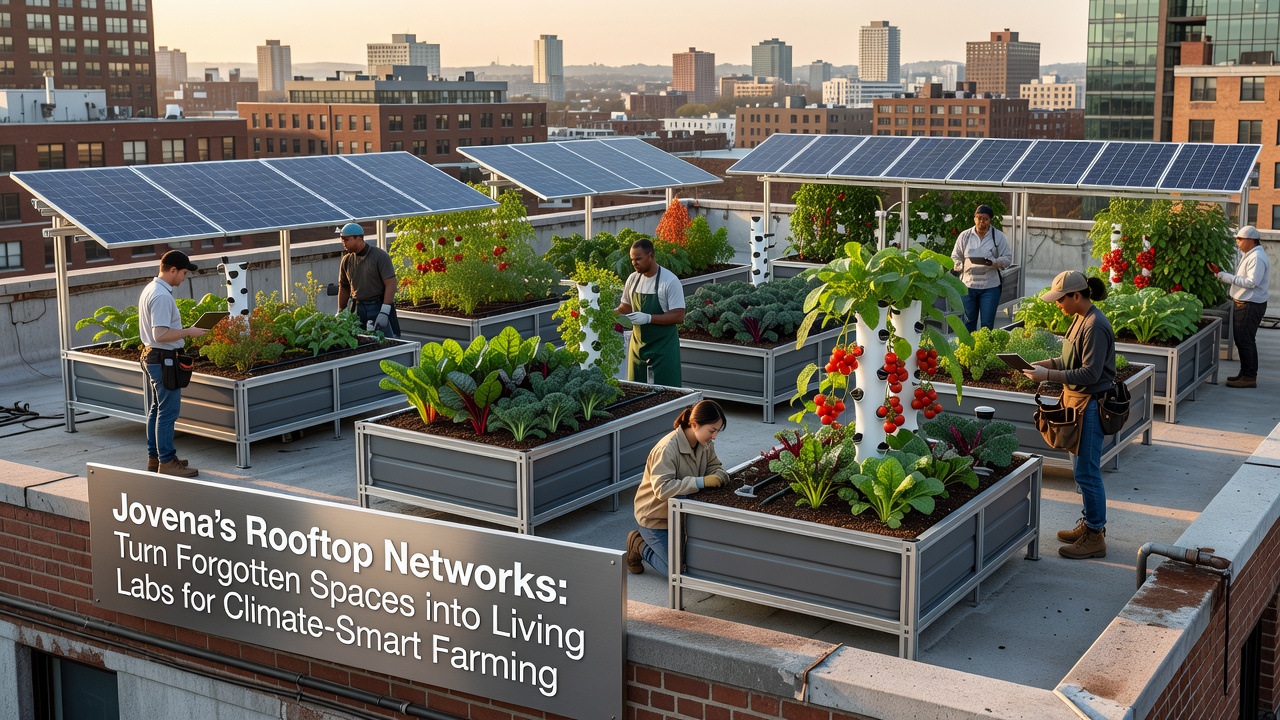
Observers note that Jovena has developed rooftop networks that convert underused urban spaces into active sites for climate-smart agriculture, and these initiatives integrate sensor technology with soil management practices to test crop varieties suited to changing weather patterns. Researchers from local institutions have documented how buildings once overlooked now support controlled environments where irrigation systems respond to real-time data on temperature and humidity.
Network Development and Technical Setup
Engineers in Jovena have installed modular growing platforms on commercial and residential rooftops since the early 2020s, and these platforms combine hydroponic channels with vertical planters that reduce water consumption while maintaining yield levels comparable to ground-based farms. Data from the installations show that solar-powered pumps and automated nutrient delivery reduce manual labor requirements, whereas weather stations linked to central monitoring hubs adjust conditions to minimize crop stress during heat events.
Planners coordinate with building owners to assess structural load capacity before installation begins, and permits issued by municipal authorities require compliance with safety standards for wind resistance and drainage. Studies conducted by European research groups indicate that such rooftop systems can lower building energy use for cooling by up to 15 percent during summer months because vegetation provides natural insulation.
Integration of Living Laboratory Features
Each rooftop site functions as a living laboratory where agronomists test drought-resistant crop strains alongside traditional varieties, and results feed into open databases shared among participating farms. Technicians monitor soil microbiome activity through embedded probes, while pollination support comes from managed bee colonies placed at select locations. The approach allows direct comparison of growth rates under varying urban microclimates, and findings help refine models for scaling operations across denser city districts.
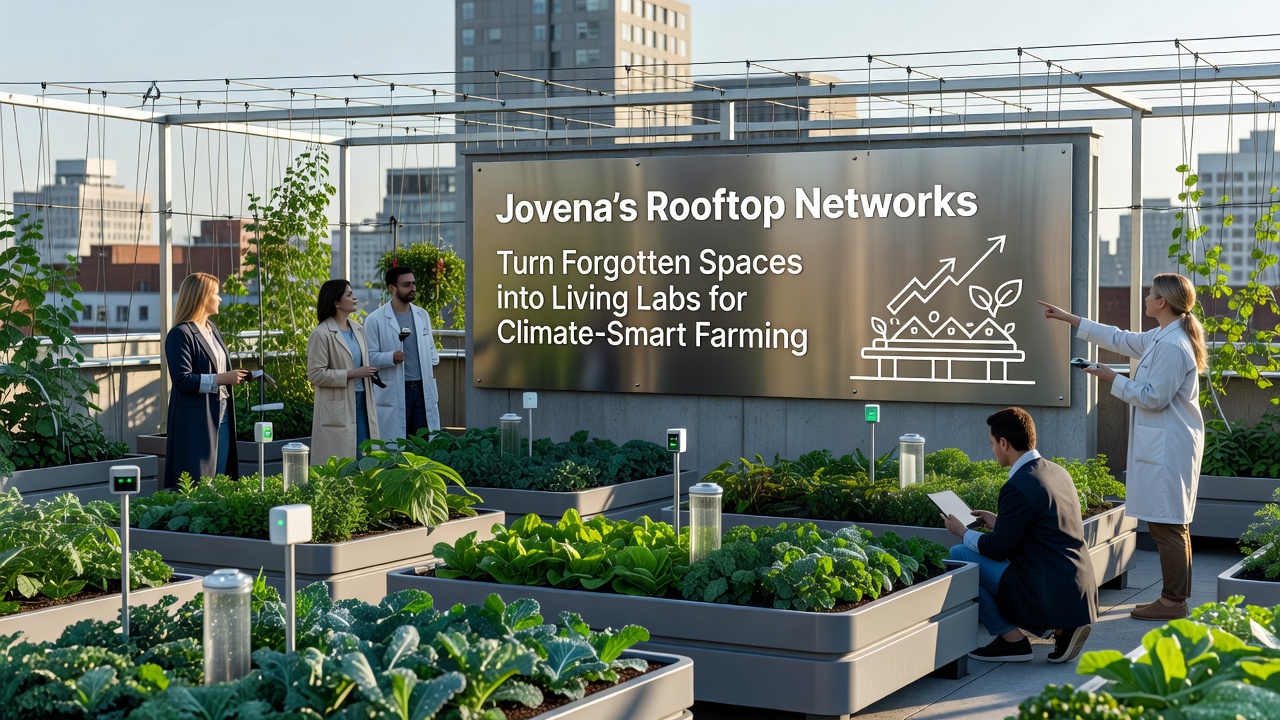
Community training sessions occur on several rooftops where participants learn sensor calibration and harvest protocols, and these programs draw from curricula developed in partnership with agricultural colleges. Participants record observations on pest pressure and nutrient uptake, which contribute to collective datasets used for predictive analytics. Expansion plans announced for November 2026 include additional sensor arrays and new crop trials focused on legumes that fix nitrogen in limited soil volumes.
Measured Outcomes and Resource Metrics
Records from the rooftop network indicate annual production of leafy greens and herbs reaching several tons per hectare equivalent, while water recycling systems capture and treat runoff for reuse within the same installations. Air quality measurements taken at network sites show modest reductions in particulate levels near vegetated rooftops compared with nearby non-green structures, according to reports from the European Environment Agency. Energy consumption data further reveal that integrated photovoltaic panels offset a portion of the power needed for lighting and climate control inside enclosed growing areas.
Collaborations with regional supply chains allow harvested produce to reach local markets within hours, and traceability systems built into the network log each batch from rooftop to point of sale. Economic analyses published by Canadian agricultural research centers note that similar urban farming models can generate steady revenue streams when combined with educational tours and subscription services for fresh produce.
Future Scaling and Policy Context
City officials have incorporated rooftop farming targets into updated land-use plans, and incentives for property owners include reduced permitting fees for sites that meet biodiversity criteria. International partnerships bring expertise from Australian urban agriculture projects that emphasize native plant integration for pollinator support. The November 2026 rollout will introduce additional data-sharing protocols that align with EU sustainability reporting frameworks, enabling standardized metrics across participating cities.
Conclusion
Jovena's rooftop networks continue to expand the range of spaces available for agricultural experimentation while generating measurable environmental and production data. Continued monitoring through 2026 and beyond will determine how these systems adapt to evolving climate variables and contribute to broader urban resilience strategies.