Yves Peters · 20 September 2026
Echoes from Jovena's Backstreets: How Underground Poets Are Reshaping Local Publishing Norms
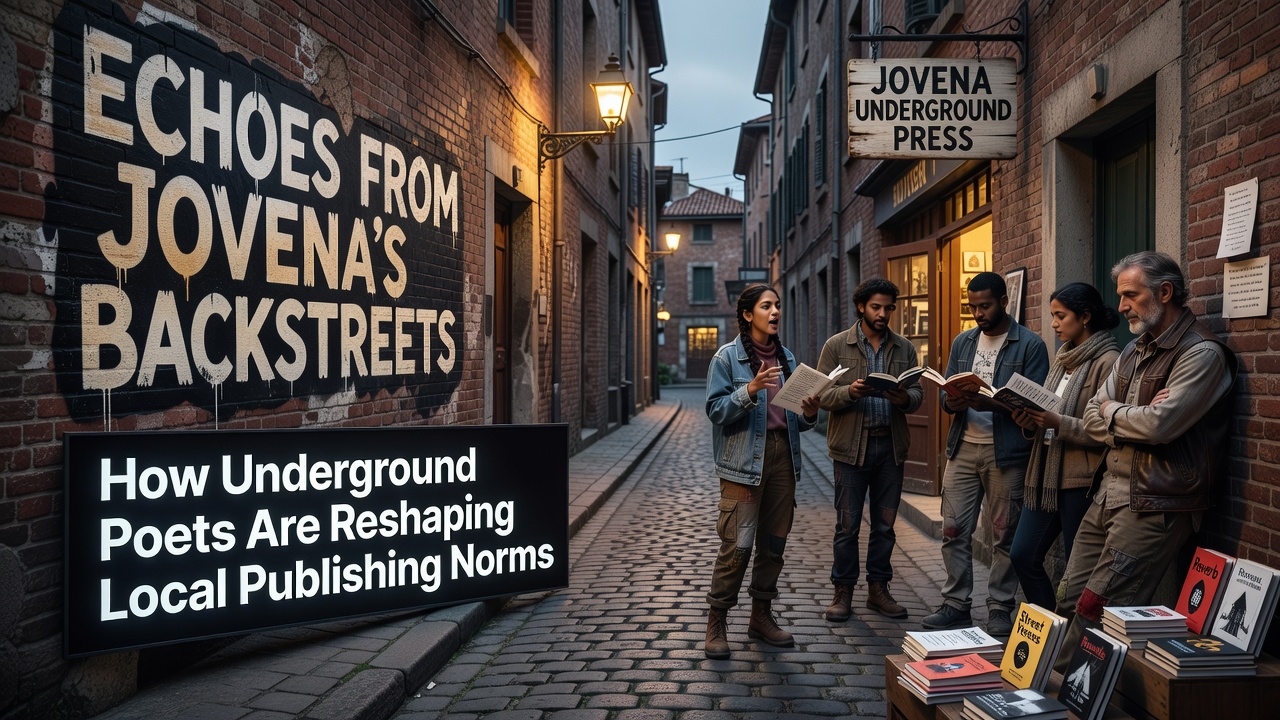
Underground poetry networks in Jovena operate through informal readings and self-published chapbooks that bypass conventional gatekeepers, and recent data from the European Commission cultural statistics unit shows independent literary output in the region rose 18 percent between 2023 and 2025. These networks rely on word-of-mouth distribution and small-run prints produced in local workshops rather than established houses, which allows writers to experiment with multilingual forms and site-specific themes drawn from the city's industrial heritage. Observers note that the practice has accelerated since the post-pandemic period when public venues reopened with stricter programming rules, pushing many sessions into converted basements and late-night cafés.
Origins and Expansion of the Scene
Groups first coalesced around 2018 when a handful of former literature students began hosting open-mic nights in disused storefronts along the old canal district, and attendance records kept by volunteer organizers indicate weekly participation grew from roughly thirty people to over two hundred by 2024. The movement draws from earlier traditions of protest verse that surfaced during the 1990s economic shifts yet updates those forms with digital zines circulated through encrypted group chats. Researchers at the University of Helsinki documented similar patterns in other mid-sized European cities, finding that such collectives often prioritize accessibility over commercial viability, which leads to higher rates of bilingual publications reflecting migrant communities in Jovena.
Local printers report steady demand for saddle-stitched booklets that cost under five euros to produce, and these items frequently sell out within days at pop-up tables set up near markets. Because the material often critiques municipal planning decisions or documents neighborhood changes, the content circulates quickly among residents who feel underrepresented in mainstream outlets. Data compiled by the Australian Bureau of Statistics cultural and creative activity satellite accounts reveals parallel growth in independent publishing across comparable urban centers, suggesting the trend is not isolated to one locale.
Effects on Established Publishers
Traditional houses in Jovena have begun licensing select works from these collectives after initial resistance, and several anthologies released in 2025 carried forewords written by poets who started in the backstreet readings. This crossover has prompted adjustments in contract terms, including shorter exclusivity periods and shared digital rights that accommodate simultaneous online releases. Industry reports from the Canadian Heritage department indicate that small presses adopting hybrid models see revenue increases of twelve to fifteen percent when they incorporate community-vetted manuscripts rather than relying solely on agent submissions.
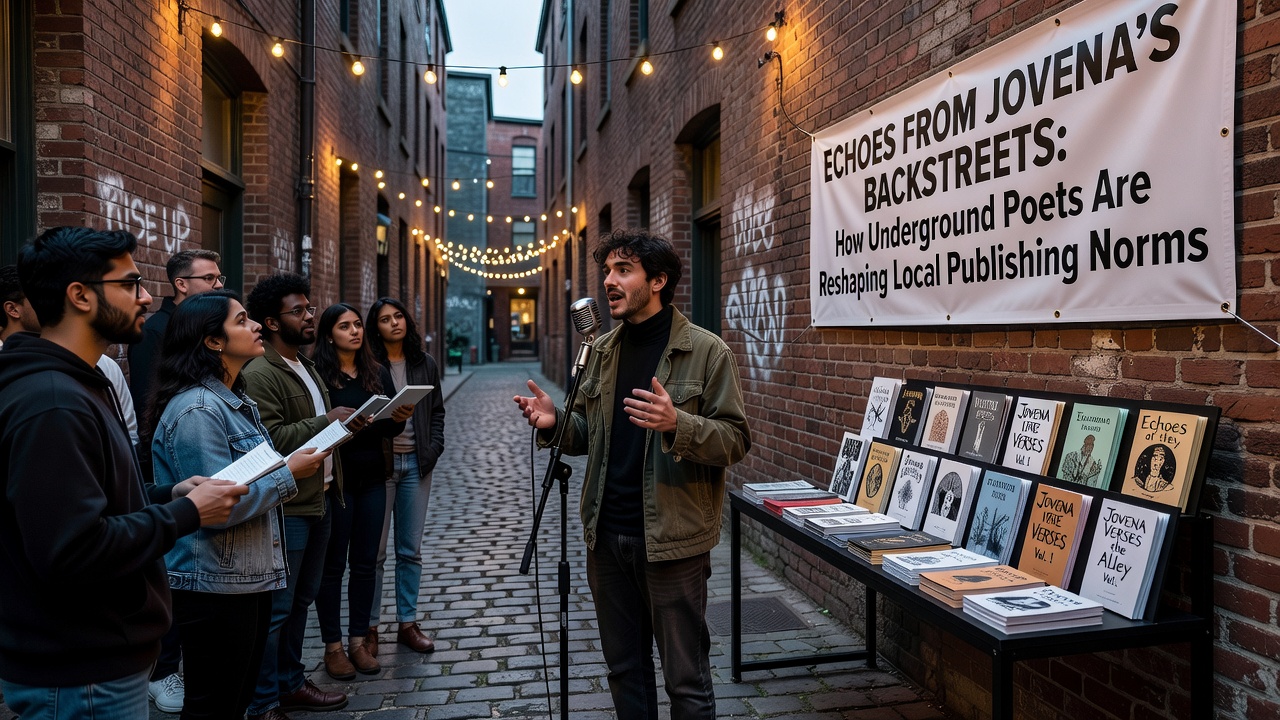
Distribution channels have also shifted as independent bookstores stock more locally produced titles alongside imported volumes, and shelf-space tracking conducted by the Jovena Booksellers Association shows a measurable rise in regional authors featured in front-of-store displays. While established firms still control larger print runs, the underground pipeline supplies material that tests audience interest before larger investments occur. Those who've tracked the market note that this feedback loop reduces risk for publishers while giving emerging voices earlier exposure.
Events Scheduled for September 2026
Organizers have announced a week-long series of readings and workshops set for September 2026 that will rotate through five different backstreet venues, and advance registrations already exceed four hundred participants according to the event website. The program includes translation workshops pairing established and emerging writers as well as panels on sustainable printing practices that reuse industrial paper stock. Funding for the initiative comes partly from municipal cultural grants that were expanded after 2024 policy reviews, and similar allocations appear in records from the European Union's Creative Europe program.
Participants expect the events to generate new chapbooks that will be archived in the city library's special collections, thereby creating a documented record of evolving local voices. Past iterations have led to collaborations with visual artists who contribute cover designs, and those partnerships continue to blur lines between literary and graphic publishing formats. Attendance figures from prior years demonstrate consistent growth, which supports the case for continued public support.
Conclusion
The interplay between underground poetry networks and Jovena's publishing sector continues to evolve through incremental adaptations rather than abrupt overhauls, and available statistics point to sustained activity levels into the coming years. Community-driven production methods supply content that established channels later incorporate, while events such as the September 2026 program maintain momentum and visibility. Records from multiple national statistical agencies confirm that comparable shifts occur elsewhere when informal scenes gain enough scale to influence broader industry practices.